Purpose-Built for Law Enforcement

PATROL
REINVENTED

71% Lower Cost Per Mile.

The UP.FIT Patrol Cybertruck delivers a 5-star NHTSA safety rating, near-zero idle energy costs, and an 8-year powertrain warranty — while cutting your agency's fuel spend by more than 70%.

Calculate Your Agency's Savings → See the Numbers
71%
Lower fuel cost
per mile driven
5 ★
NHTSA Overall
Safety Rating
8 yr
150,000 mi
~0.3–1.1
kWh/hr
Idle energy draw
per hour
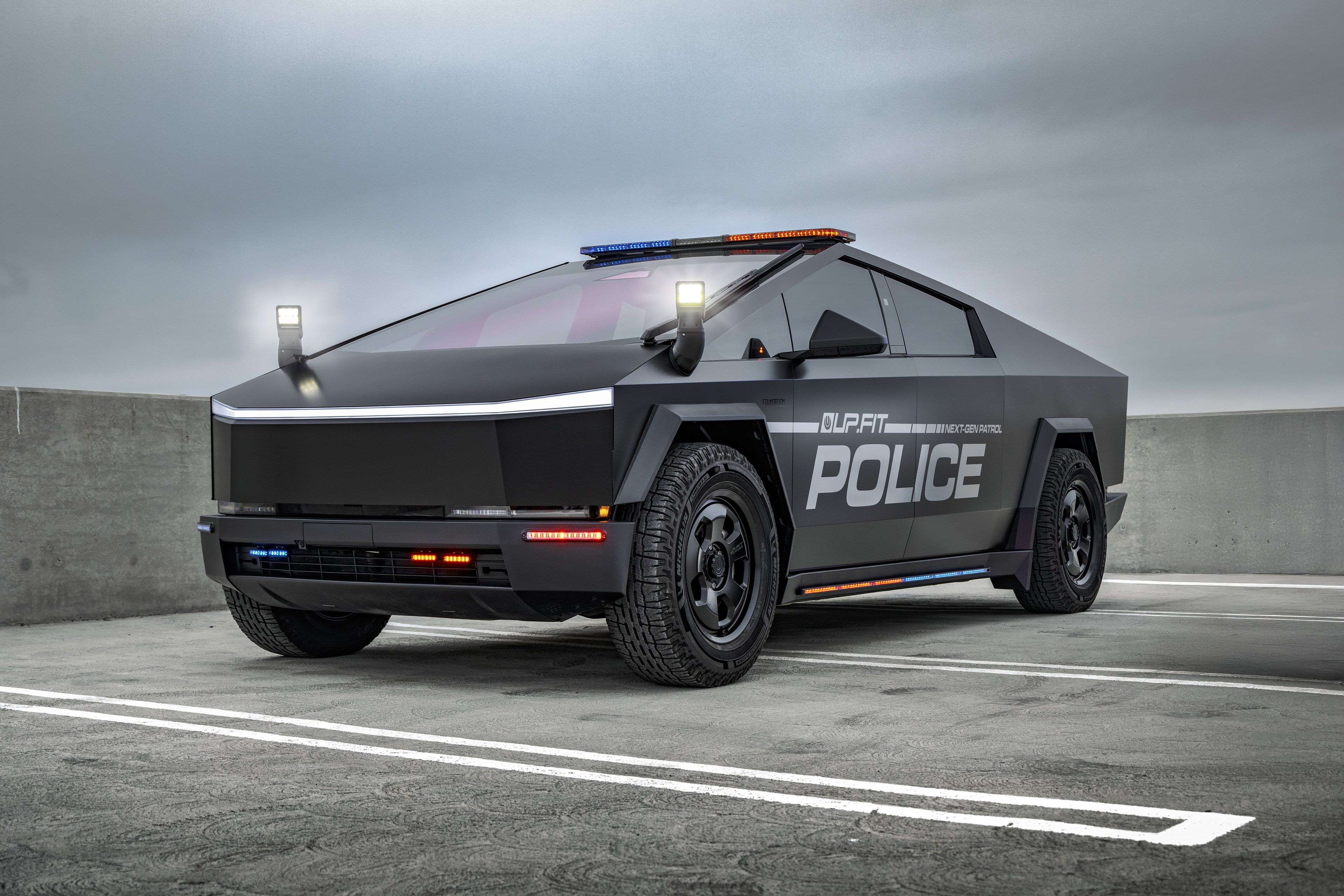
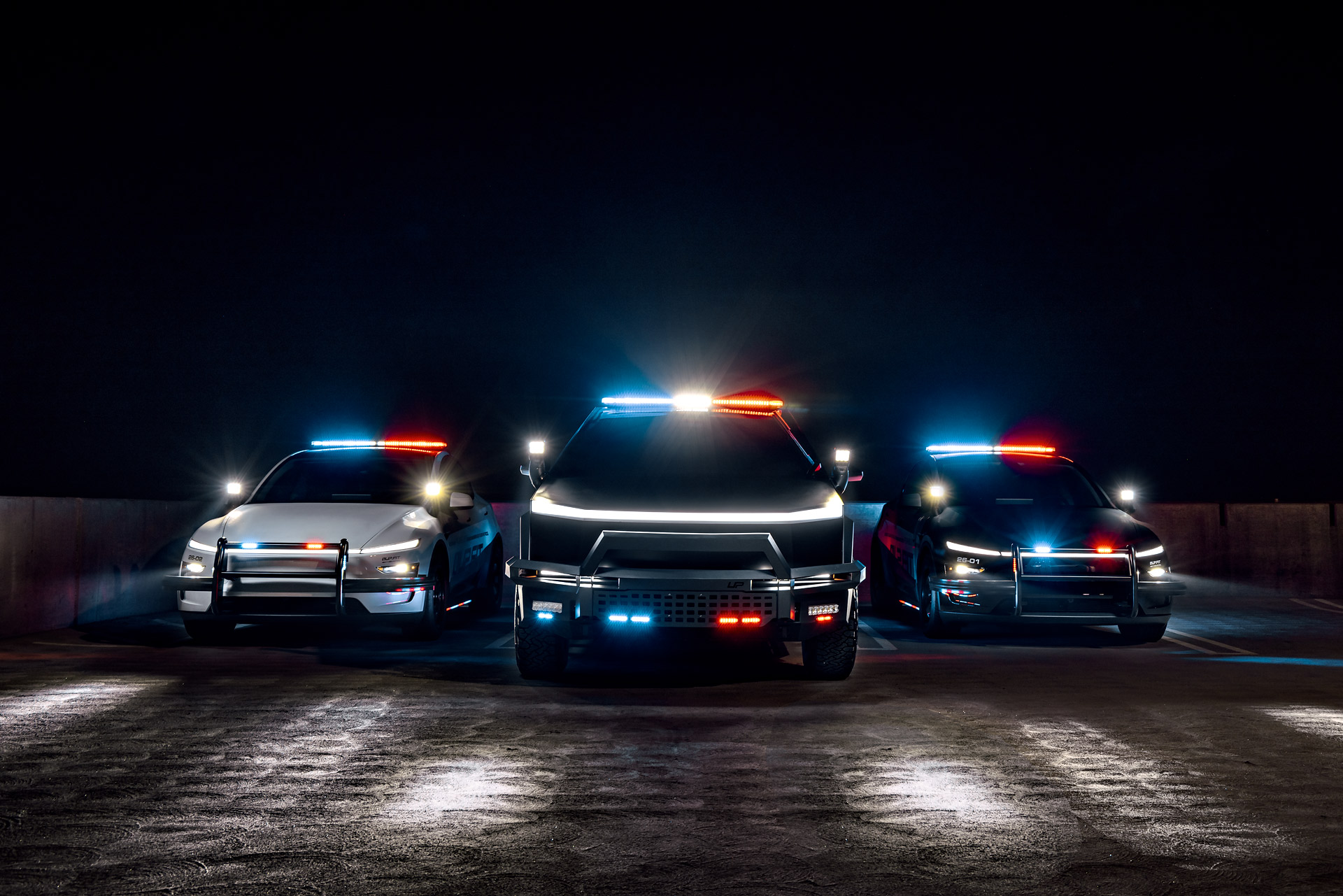
UP.FIT Patrol Cybertruck law enforcement fleet
Fuel Cost Per Mile
The Gap Is Undeniable.
UP.FIT PATROL CYBERTRUCK · OUTFITTED FOR ACTIVE LAW ENFORCEMENT PATROL
National Avg Gas: $4.081/gal · AAA
US Avg Electricity: 13.64¢/kWh · EIA Table 5.6.A

Using current national average prices for gasoline and electricity, the math is clear: driving on electrons costs less than a third the price of driving on gasoline — every single mile, every single shift.

Legacy Gasoline Patrol Vehicle
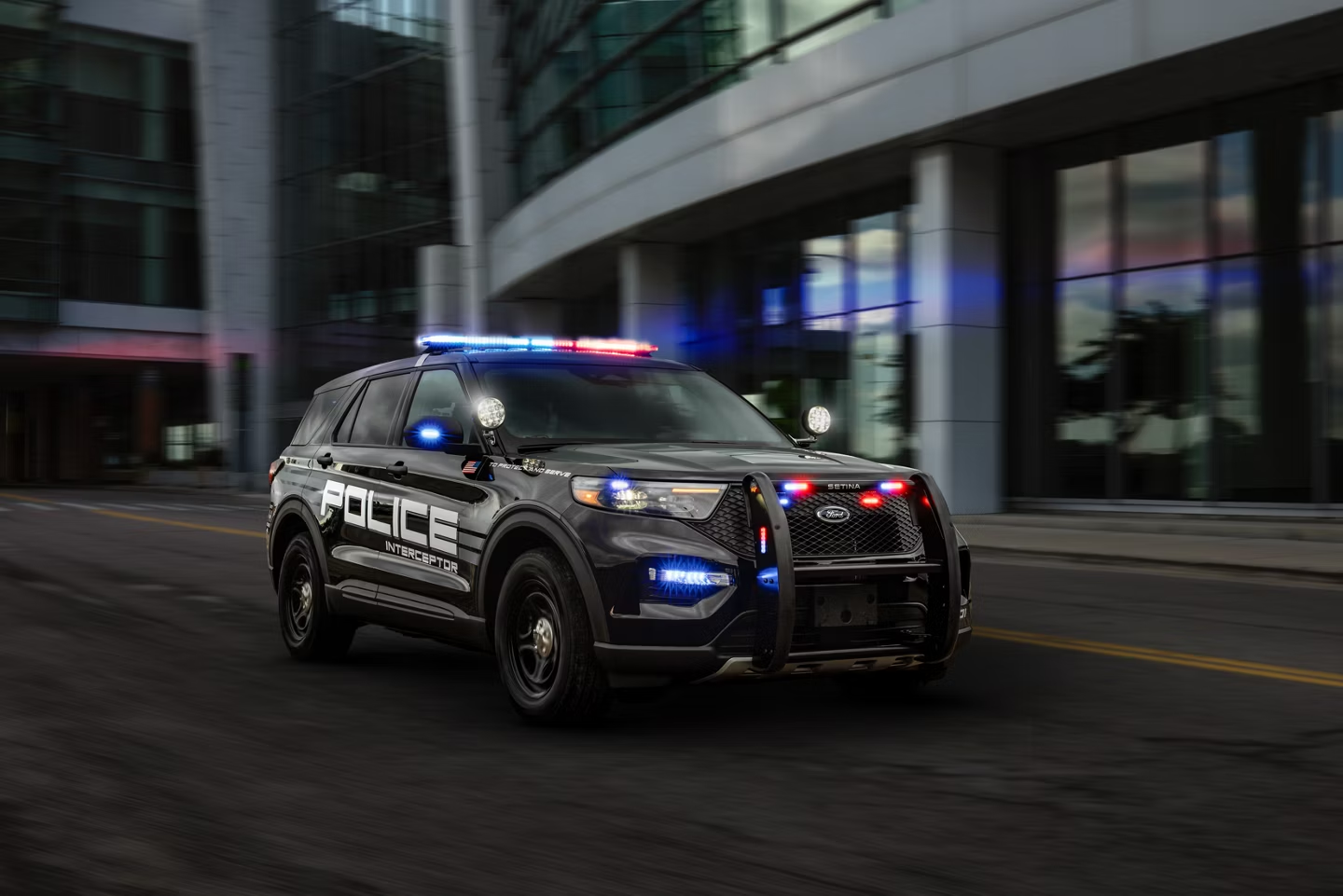
2025 Ford Explorer Police Interceptor Utility
Ford Explorer Police Interceptor Utility
(Typical Patrol SUV · 20 MPG)
$ 0 .00
per mile · at current AAA average gas price
  • Gas price (AAA national avg) $4.081/gal
  • Vehicle fuel economy 20 MPG
  • Idle fuel burn ~0.5 gal/hr
  • Approx. idle cost per hour $2.04/hr
  • Annual idle fuel cost $6,664
  • Annual driving fuel cost $3,061
UP.FIT Patrol Cybertruck
UP.FIT Patrol Cybertruck — Tesla Cybertruck AWD
Tesla Cybertruck AWD
(Upfitted for Law Enforcement · 0.430 kWh/mi)
$ 0 .00
per mile · at current EIA average electricity rate
  • Electricity rate (EIA commercial) 13.64¢/kWh
  • Energy consumption 0.430 kWh/mile
  • Idle energy draw ~0.3–1.1 kWh/hr
  • Idle energy cost per hour ~$0.04–$0.15/hr
  • Annual idle energy cost ~$65–$245/yr
  • Annual driving energy cost $880
U.S. Average Annual Fuel Cost Savings Per Vehicle
Based on 15,000 miles driven + 1,633 hours idling per year · DOE/AFDC patrol vehicle data
$8,845 / year
per vehicle in fuel savings alone
Calculate Your Agency's Savings →
Vehicle data: fueleconomy.gov
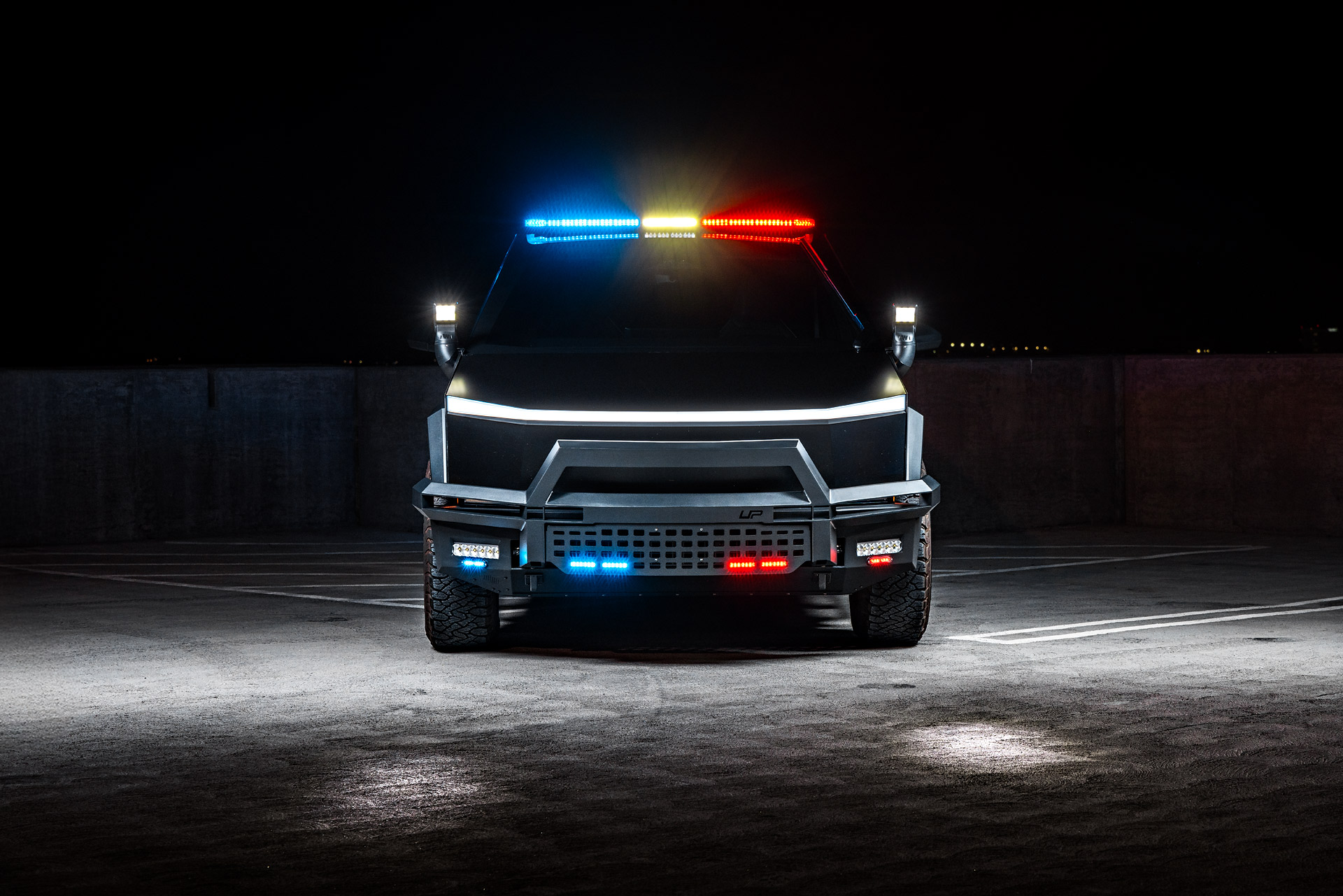
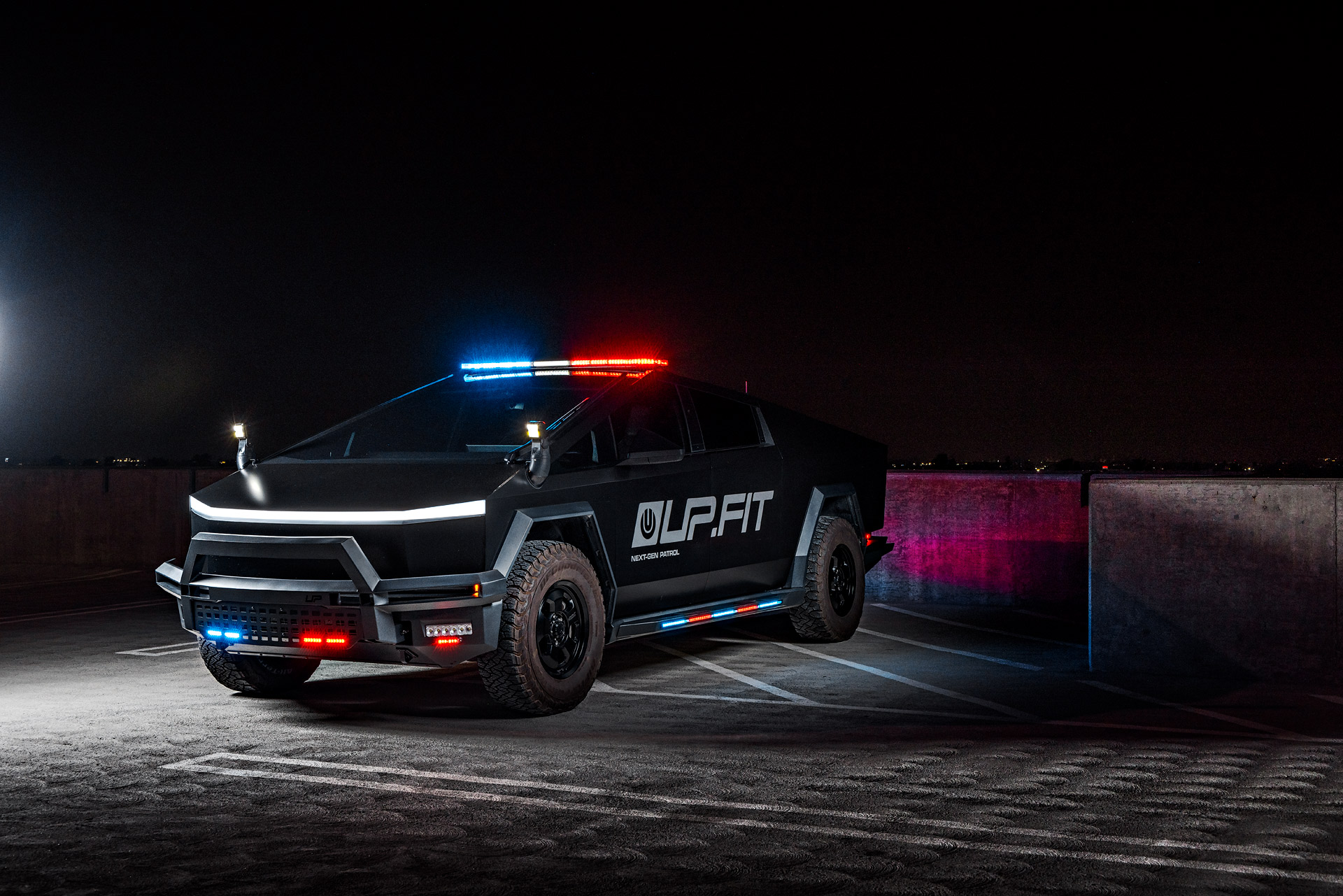
UP.FIT Patrol Cybertruck — head-on
The Hidden Budget Drain

Your Biggest Fuel Cost
Isn't Driving. It's Idling.

Annual Patrol Vehicle Idling —
By the Numbers
Patrol hours at idle per year ~1,600–2,000 hrs
Mileage equivalent from idling (@ 33 mi/hr) ~53,900 mi equivalent
Gallons burned at idle (gas) per year 1,633 gallons
Annual idle fuel cost — gas vehicle $6,664
Annual idle energy cost — Cybertruck ~$65–$245/yr
Drivetrain heat stress from idling High — degrades components
EV drivetrain stress while idle None — motors off
Idle fuel (the silent killer)69%
Driving fuel31%
Share of total annual gasoline fuel cost per patrol vehicle

Gasoline Engines Must Keep Running — Even Standing Still

Officers spend the majority of their on-duty time not driving — parked at traffic stops, writing reports, waiting on calls. In a gasoline vehicle, the engine cannot stop. Emergency lights, radios, MDC, and climate control all depend on the alternator, and the alternator depends on the engine.

A standard Ford Police Interceptor burns an estimated 1,633 gallons of gasoline per year at idle — before a single mile of patrol driving. At today's national average gas price, that's $6,664 per vehicle, per year, doing nothing but sitting.

The UP.FIT Patrol Cybertruck has no combustion engine. When stopped, there is no fuel burn. All patrol systems — lights, radio, MDC, HVAC — draw from the battery pack at a fraction of the cost: roughly 0.3–1.1 kWh per hour, or about $0.04–$0.15 per idle hour at typical commercial electricity rates.

Drivetrain Longevity Bonus: Prolonged idling generates sustained heat stress on engine blocks, coolant systems, transmission fluid, and belts — compressing vehicle service life. The Cybertruck's electric motors have no combustion, no transmission, and no oil to degrade. Fewer moving parts means dramatically lower maintenance costs and a longer useful life in your fleet.

Calculate Your Agency's Savings →
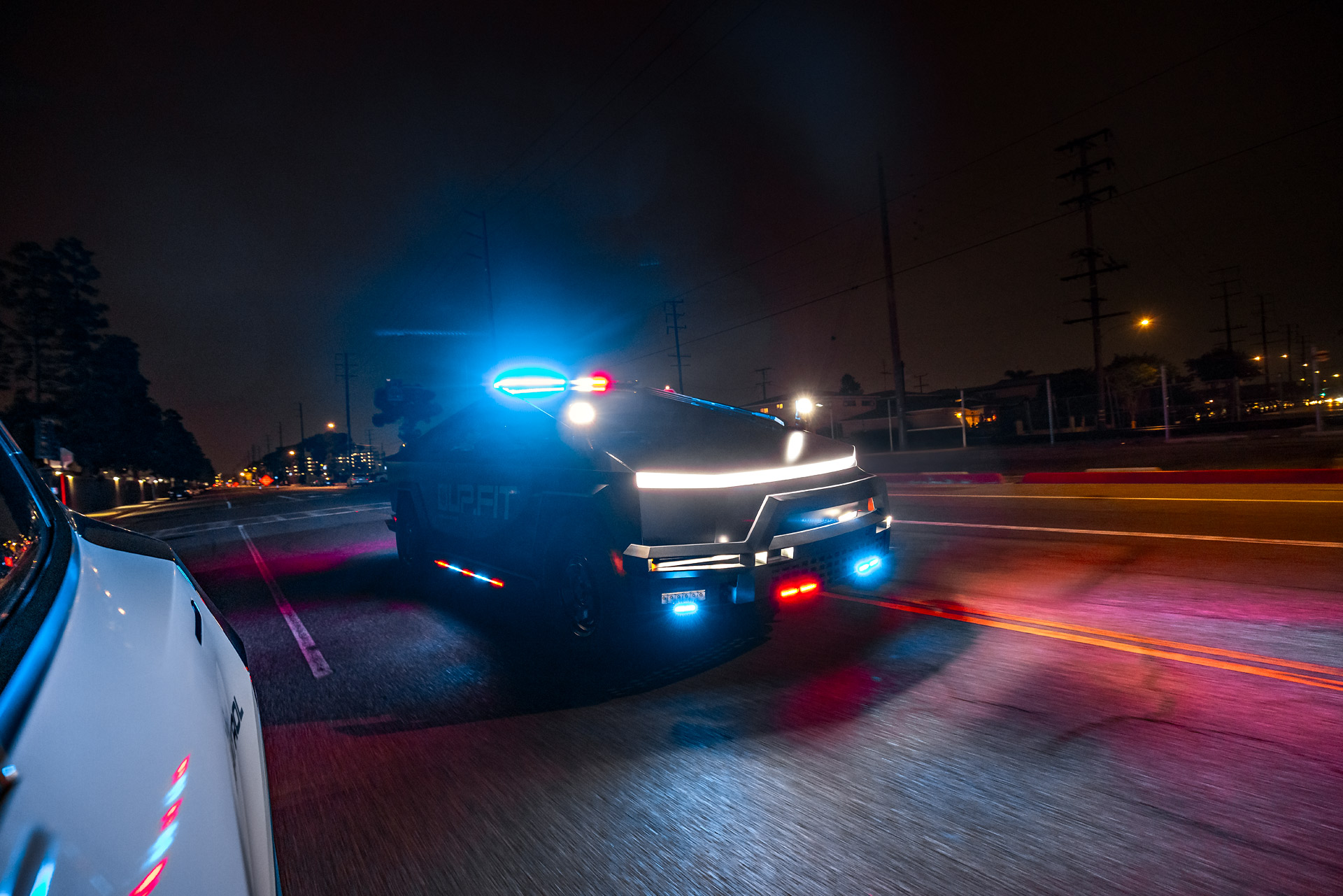
UP.FIT Patrol Cybertruck on patrol — nighttime pursuit
10 Reasons to Switch

Every Factor Favors
the UP.FIT Patrol Cybertruck.

01

71% Lower Fuel Cost Per Mile

At current national averages, electricity costs 5.9¢/mile versus 20.4¢/mile for gasoline. Every patrol mile saves your department money.

Direct Savings
02
🚗

Near-Zero Idle Energy Cost

No combustion engine means no gasoline burned at idle. An UP.FIT Patrol Cybertruck typically draws between just 0.3–1.1 kWh/hr from the battery — pennies per hour versus dollars for a running gas engine. Idle time, your fleet's largest fuel expense, nearly disappears.

Direct Savings
03
🔧

Drastically Reduced Maintenance

No oil changes. No transmission service. No belts, spark plugs, or exhaust system — and regenerative braking decreases the severe wear on brake pads and rotors typically seen on gasoline patrol vehicles. Plus, the electric drivetrain has far fewer moving parts, slashing scheduled maintenance costs.

Direct Savings
04
🛡️

5-Star NHTSA Safety Rating

The highest possible NHTSA safety rating means superior occupant protection for every officer in the vehicle — reducing injury risk, workers' compensation exposure, and line-of-duty incidents.

Officer Safety
05
🚘

Advanced Driver Assistance Technology

Tesla Vision's 360° camera suite provides automatic emergency braking, lane departure warning, and collision avoidance — actively reducing accident frequency and severity across your fleet.

Officer Safety
06
🔒

Ballistic-Resistant Stainless Steel Body

Ultra-hard 30X cold-rolled stainless steel panels withstand 9mm and shotgun rounds without penetration — a level of passive ballistic protection unavailable in any gasoline patrol vehicle without aftermarket shielding upgrades.

Officer Safety
07
📅

8-Year / 150,000-Mile Warranty

Tesla backs the Cybertruck battery and drive units for 8 years or 150,000 miles — nearly double the expected service life of a typical gasoline patrol vehicle.

Fleet Longevity
08
📲

Over-the-Air Software Upgrades

Tesla continuously improves vehicle capability through OTA updates — adding features and improving performance without hardware replacement, extending your fleet's relevance and functional life.

Fleet Longevity
09
💰

Higher Resale Value at Fleet Cycle End

Tesla vehicles hold their value exceptionally well compared to gasoline counterparts. At fleet cycle end, the native onboard A.I. chips, the standard Tesla Vision system, OTA software updates, and the long powertrain warranty all deliver stronger resale returns.

Fleet Longevity
10

Officer Recruiting & Retention

Deploying the most advanced, highest-rated patrol vehicle on the market signals agency investment in officer safety and wellbeing — a meaningful differentiator in today's competitive law enforcement hiring environment.

Workforce Value
UP.FIT Patrol Cybertruck fleet — night operations
Safety Ratings

The Safest Patrol Vehicle
on American Roads.

NHTSA Crash Test Results — 2024/2025 Tesla Cybertruck
Overall Safety Rating
★★★★★ 5 / 5 Stars
Frontal Crash
★★★★★ 5 / 5 Stars
Side Crash
★★★★★ 5 / 5 Stars
Rollover Resistance
★★★★ 4 / 5 Stars
Rollover Risk
12.4% — Did not tip in dynamic test
🏆
IIHS Top Safety Pick+
2025 Cybertrucks (built after April 2025) earn top marks from both NHTSA and IIHS

Safer Vehicles Protect Officers
and Your Budget.

Tesla Vision 360° camera system — Active collision avoidance, automatic emergency braking, and lane departure warnings prevent accidents before they happen.
Floor-mounted battery pack — An ultra-low center of gravity provides exceptional stability and rollover resistance in high-speed patrol and pursuit scenarios.
30X stainless steel exoskeleton — Ballistic-resistant body panels capable of withstanding 9mm and shotgun rounds — passive protection no gasoline patrol vehicle offers.
Instant AWD torque — The ability to rapidly extract from dangerous situations is an active safety feature in its own right during high-risk patrol operations.
Reduced workers' compensation claims — Fewer officer injuries from collisions means lower insurance premiums and comp payouts across the entire fleet cycle.
Contact UP.FIT →
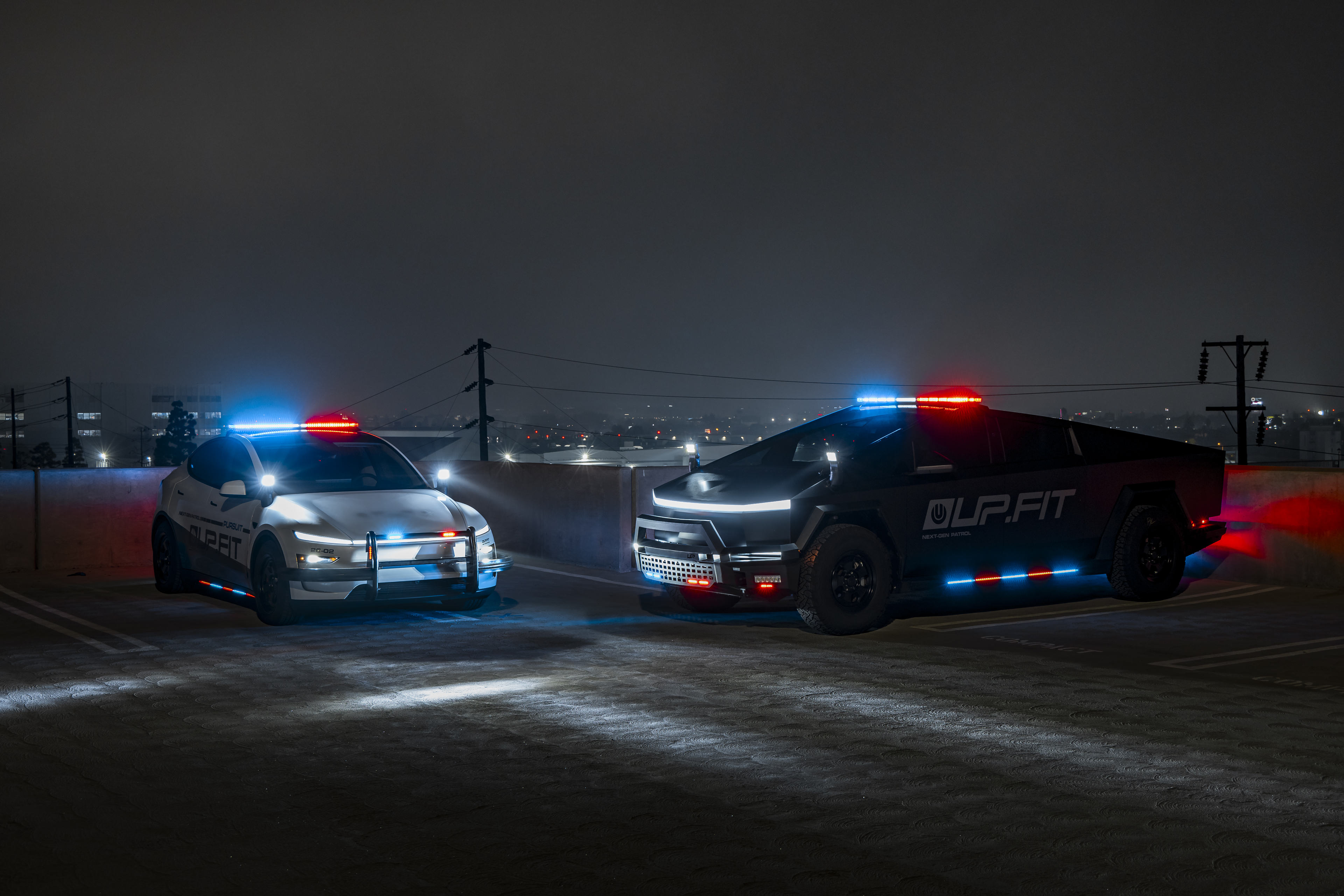
UP.FIT Patrol fleet — Model Y AWD and Cybertruck
Fleet-Level Analysis

Savings That Scale With
Every Vehicle You Deploy.

Individual vehicle savings compound across even a modest fleet. Use our full TCO calculator to model your department's specific fleet size, mileage, and patrol patterns.

Annual Fleet Fuel Savings Preview
Fleet size (example) 10 vehicles
Miles per vehicle per year 15,000 mi
Idle hours per vehicle per year 1,633 hrs

Gas fleet total annual fuel cost $97,245
EV fleet total annual fuel cost $8,800

Annual savings
(10 vehicles)
$88,445
Calculate for Your Fleet Size →
~$8,845
Annual fuel savings per vehicle
At current national average fuel prices, compared to a gasoline patrol vehicle averaging 20 MPG with typical patrol idle patterns.
10 yr
Expected fleet service life
The Cybertruck's expected service life is nearly triple the 3–4 year replacement cycle typical for gasoline Ford Police Interceptors — backed by an 8-year powertrain warranty.
$70K+
Lifetime fuel savings per vehicle
Over an 8-year fleet cycle at current fuel pricing and typical patrol usage patterns — before accounting for maintenance savings or resale value advantages.
$2.4M
20-year fleet savings (documented)
Independent municipal fleet analysis documented $2.4M+ in 20-year savings from police vehicle electrification — the majority directly attributable to patrol vehicle replacement.
UP.FIT Patrol Cybertruck — purpose-built for law enforcement
Structured Fleet Acquisition

Don't Wait Years...
For Savings That
Start Now.

$70K+
in projected lifetime fuel savings per vehicle — UP.FIT's financial tools help your agency access that value at the point of acquisition, not after years of operation.

The numbers on this page represent real, documented savings — fuel, maintenance, and operational costs that accumulate over the full service life of every vehicle in your fleet. The traditional challenge is timing: a gasoline patrol vehicle costs less at the point of purchase, while the Cybertruck's economic advantages arrive gradually over years of operation.

UP.FIT has developed structured financial tools specifically designed to bridge that gap. By modeling your agency's projected savings across the full fleet cycle, we can structure an acquisition that effectively pulls those future savings forward — converting long-term operational economics into a lower net cost today. Your agency captures the advantage of modern technology and a longer vehicle service life without waiting for the savings to accumulate one tank at a time.

The TCO calculator on the following page is the starting point. Run your numbers, see your agency's complete savings picture, and begin to understand what a structured acquisition could look like — vehicle by vehicle, for your specific fleet.

Calculate Your
Agency's Savings Now.

Enter your fleet size, annual mileage, and patrol patterns. See a detailed financial comparison — fuel, maintenance, resale value, and total cost of ownership over your full fleet cycle.

Calculate Your Agency's Savings
Compare vehicles side-by-side at fueleconomy.gov
Fuel cost comparison Maintenance cost modeling Fleet resale analysis Multi-year TCO projection Department-specific inputs